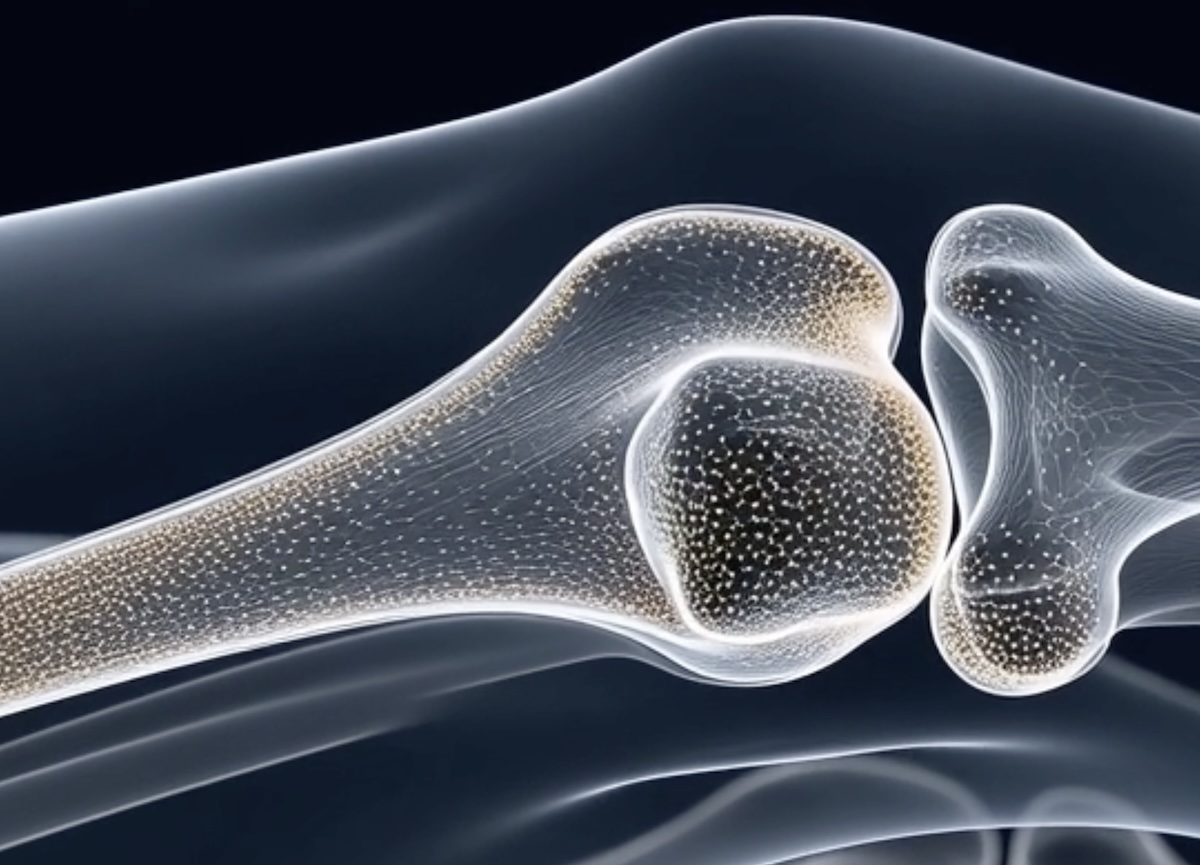
What Is Osteogenic Loading? How It Works, Benefits, and Who Needs It
Quick Answer
Osteogenic loading works by triggering the body's natural bone-building response - osteoblast activity - through brief, intense compression that exceeds the bone's everyday loading threshold.
Unlike general exercise, osteogenic loading is specifically engineered to reach the mechanical forces required to signal new bone growth, typically 4–10 times body weight.
What Does "Osteogenic" Mean?
The word osteogenic comes from the Greek roots osteo (bone) and genesis (origin or creation).
Osteogenic literally means "bone-creating" or "bone-forming." Osteogenic loading, therefore, refers to any mechanical stimulus powerful enough to trigger the cellular machinery responsible for depositing new bone tissue.
The Science Behind Osteogenic Loading
How Bones Respond to Mechanical Stress
Bone is a living tissue that continuously remodels itself through a process called bone remodeling, involving two key cell types:
- Osteoblasts — cells that build new bone
- Osteoclasts — cells that break down old bone
When bone is subjected to sufficient mechanical strain, osteocytes (mature bone cells embedded within bone tissue) detect the deformation and send chemical signals that upregulate osteoblast activity.
This principle is captured in Wolff's Law, which states that bone remodels and strengthens in response to the loads it regularly experiences.
The Minimum Effective Strain Threshold
Not all exercise stimulates bone growth equally.
Research identifies a minimum effective strain (MES) threshold that must be crossed before meaningful osteogenesis is triggered.
That threshold is generally estimated at 4.2 times body weight applied axially.
Most conventional exercise, including walking and standard resistance training, falls well below this threshold.
Osteogenic loading protocols are specifically designed to close that gap.
The Role of Impact vs. Compression
Osteogenic loading is distinct from impact loading (e.g., jumping or running).
While high-impact activities do stimulate bone to some degree, they also carry significant injury risk - especially for older adults or those with existing bone loss.
Osteogenic loading uses controlled, axial compression in a joint-safe position, allowing much higher forces to be safely applied through the spine, hips, and femoral neck — the sites most vulnerable to osteoporotic fractures.
Osteogenic Loading vs. Regular Exercise: What's the Difference?
| Feature | Regular Exercise | Osteogenic Loading |
|---|---|---|
| Force applied | 1–2× body weight | 4–10× body weight |
| Primary goal | Cardiovascular, muscle | Bone mass density |
| Frequency needed | Multiple hours/week | ~5 minutes/week |
| Joint impact | Varies (often high) | Controlled, low joint stress |
| Bone stimulus | Mild to moderate | Above MES threshold |
| Best population | General fitness | Osteopenia, osteoporosis, aging adults |
Who Needs Osteogenic Loading?
Osteogenic loading is most relevant for:
- People with osteopenia or osteoporosis — an estimated 54 million Americans have low bone density, putting them at fracture risk
- Postmenopausal women — estrogen decline accelerates bone loss after menopause; women lose up to 20% of bone density in the first 5–7 years after menopause
- Aging men — testosterone decline after age 50 contributes to gradual bone loss
- Sedentary individuals — those with desk jobs or low daily activity have chronically understimulated bones
- Athletes in non-weight-bearing sports — swimmers and cyclists often have lower bone density than their fitness levels would suggest
- Patients recovering from fractures — controlled loading can accelerate healing when appropriately prescribed
- Anyone seeking longevity and fall prevention — stronger bones dramatically reduce fracture risk and long-term disability
How Osteogenic Loading Is Applied
Osteogenic Loading Equipment
Measured isometric strength training machines are designed to target different skeletal region:
- Upper Extremity — loads the spine, wrists, and forearm bones through a pushing motion
- Lower Extremity — loads the femoral neck and hip through a leg press-style motion
- Hip Flexion — targets the femur and hip flexors
- Posture — addresses spinal extension and posture
Each session lasts approximately 5 minutes, performed once per week.
The equipment is designed so that user self-limits - they push or pull to the point of maximum comfortable effort, allowing their own strength to determine the force applied, rather than a preset external weight.
Home and Gym-Based Alternatives
While specialized equipment such as the viiivPRO are ideal, elements of osteogenic loading can be incorporated into general training:
- Axial barbell squats and deadlifts — when loaded to near-maximal effort, these approach osteogenic thresholds for the lower extremity
- Impact-based protocols — brief jumping or heel-drop exercises (10 heel drops per day) have shown bone density improvements in clinical studies
- Weighted vests — worn during walking, these increase skeletal loading, though typically below the ideal MES threshold
- Resistance band systems — accommodating resistance allows peak force at the end of range of motion where joints are strongest
Evidence: Does Osteogenic Loading Actually Increase Bone Density?
Key Clinical Findings
The evidence base for osteogenic loading is growing, though much of it comes from research tied to specific protocols and devices.
Peer-reviewed studies and clinical observations suggest:
- A 2014 study published in the Journal of Osteoporosis and Physical Activity found that participants using osteogenic loading devices showed statistically significant improvements in bone density at the femoral neck and lumbar spine compared to controls.
- Multiple studies on high-impact resistance training (axial loading above 4× body weight) consistently show bone density improvements of 1–8% per year, compared to typical age-related annual losses of 1–3%.
- A 2015 study in Osteoporosis International confirmed that musculoskeletal loading forces exceeding the MES threshold are a prerequisite for new bone apposition.
- Research on heel-drop exercises (a simpler osteogenic stimulus) demonstrated measurable improvements in hip bone density in postmenopausal women after 12 months.
Limitations of the Evidence
- Many studies are small-scale or short-duration
- Much research is industry-funded
- Long-term fracture prevention data (vs. surrogate markers like DEXA scan results) is still limited
- Individual response varies based on genetics, hormones, nutrition, and baseline bone density
What Experts Say
The general consensus in orthopedic and sports medicine communities is that high-magnitude mechanical loading is the most potent non-pharmacological intervention for bone density.
The debate is less about the principle and more about optimal dosing, safety, and which populations benefit most.
Osteogenic Loading and Nutrition: What You Need to Build Bone
No loading protocol works in isolation. The raw materials for bone formation must also be present:
- Calcium — the primary mineral in hydroxyapatite (bone mineral matrix). Adults need 1,000–1,200 mg/day
- Vitamin D3 — essential for calcium absorption; deficiency blunts the osteogenic response to loading
- Vitamin K2 — directs calcium into bone and away from arteries (MK-7 form preferred)
- Magnesium — cofactor for hundreds of enzymatic processes, including bone mineralization
- Protein — collagen is the scaffolding of bone; adequate protein intake (1.2–1.6 g/kg body weight) supports bone matrix synthesis
- Collagen peptides — emerging evidence suggests supplemental collagen with vitamin C may enhance bone collagen synthesis
Osteogenic Loading Safety Considerations
When performed correctly, osteogenic loading is considered safe even for elderly or osteoporotic individuals because:
- Forces are applied axially, not as shear or torsional stress
- The joint is in its strongest biomechanical position during peak loading
- The user self-determines maximum force — no external weight is imposed beyond what they can safely generate
- Sessions are brief, reducing cumulative stress
Contraindications and precautions include:
- Recent fracture (within 6–12 months, depending on site)
- Severe spinal stenosis or disc herniation
- Active bone cancer or metastatic disease to bone
- Severe joint instability
- Uncontrolled hypertension (some protocols raise intra-abdominal pressure)
Always consult a physician before starting any osteogenic loading program, particularly if you have diagnosed osteoporosis or a history of fractures.
Frequently Asked Questions About Osteogenic Loading
How long does it take to see results from osteogenic loading?
Most clinical protocols assess outcomes at 6–12 months using DEXA scans.
Bone remodeling cycles take approximately 3–6 months, so meaningful improvements in bone mineral density (BMD) are typically visible after two or more complete remodeling cycles.
Some individuals report improved posture, strength, and balance within weeks, even before measurable density changes occur.
Is once-a-week really enough?
Yes — for pure osteogenic stimulus, evidence supports once-weekly sessions as sufficient and possibly optimal. More frequent loading does not appear to dramatically increase the osteogenic signal and may reduce recovery time available for bone to deposit new matrix.
Can osteogenic loading reverse osteoporosis?
Osteogenic loading has been shown to slow, halt, reverse bone loss in osteoporotic individuals.
With proper form and the right osteogenic loading equipment, it can fully reverse severe osteoporosis, and it is a meaningful adjunct - and an alternative - to pharmaceutical interventions such as bisphosphonates or RANKL inhibitors.
Is osteogenic loading safe for seniors?
Yes, with appropriate medical screening. Because forces are self-generated and axially applied in a supported posture, the risk of injury is low. Many client training on a viiivPRO are in their 70s, 80s, and 90s.
Does osteogenic loading help with balance and fall prevention?
Yes. Beyond bone density, osteogenic loading strengthens the muscles, tendons, and neuromuscular pathways involved in balance and proprioception — all of which are critical for fall prevention in older adults.
Summary: Key Takeaways
- Osteogenic loading stimulates bone formation by applying mechanical forces above the minimum effective strain threshold (~4.2× body weight)
- It works through the same biological principle as Wolff's Law — bones adapt to the loads placed on them
- Use specialized equipment to safely deliver these forces in ~5 minutes per week
- Evidence supports improvements in bone mineral density of 1–8% per year or more, which is clinically significant against age-related decline
- Best results require adequate calcium, vitamin D, K2, protein, and magnesium
- Osteogenic loading is especially valuable for postmenopausal women, older adults, and anyone with osteopenia or osteoporosis
- It is generally safe, but medical clearance is advised for those with existing bone conditions
This article is for informational purposes only and does not constitute medical advice. Consult a qualified healthcare provider before beginning any bone health or exercise program.